Author: admin

  • What Robotics and Museums Can Teach Each Other

    What Robotics and Museums Can Teach Each Other

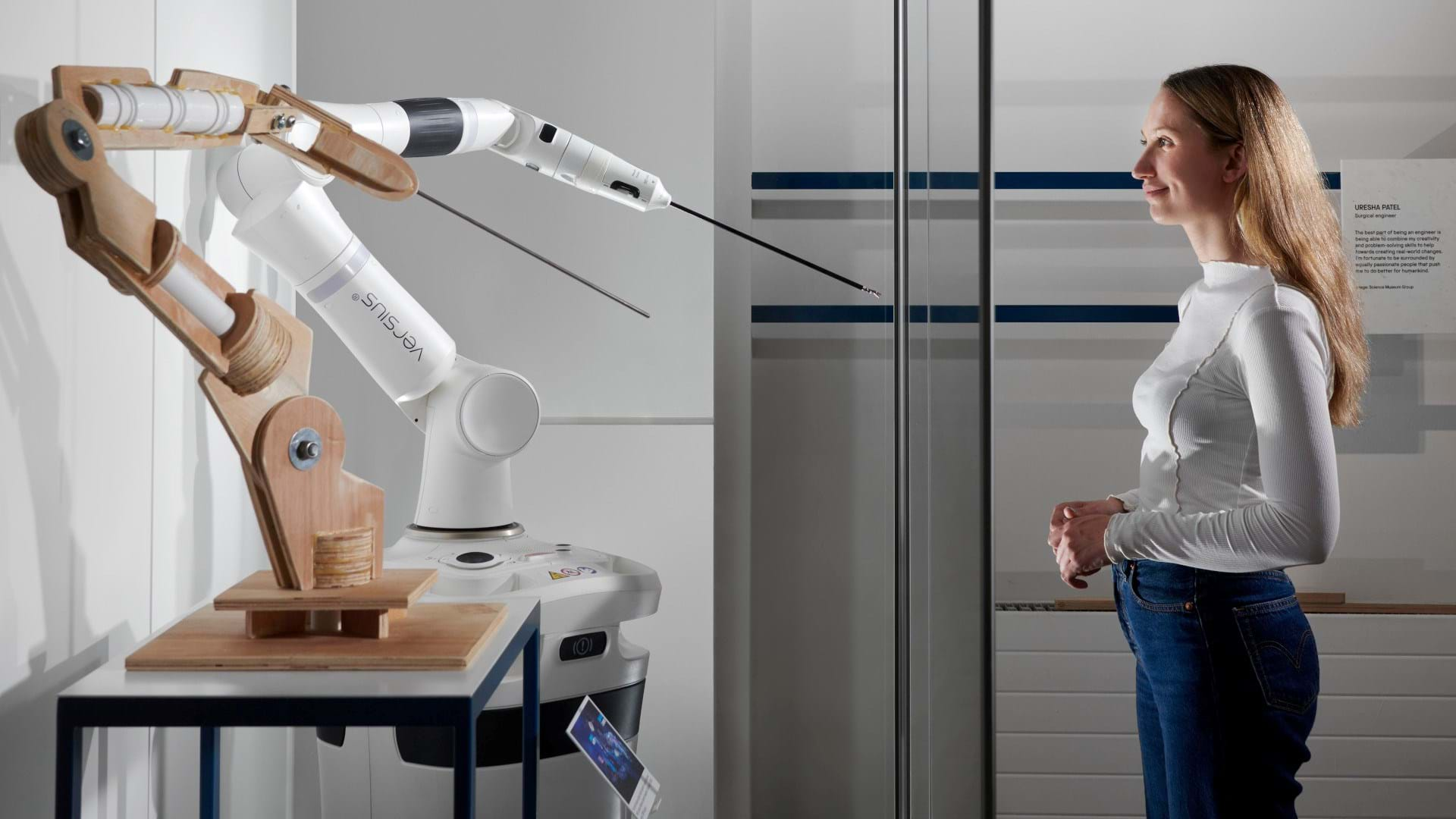
    Stepping outside of the robotics and stem classes and into discussions about museum curation definitely left me feeling bit out of my element. As a Robotics major, my daily life revolves around C++, 3D printers, and definitive answers, either your code compiles and the robot moves, or it doesn’t. The museum world, on the other hand, deals in nuances, interpretation, and deep social history. However, as I have dug deeper into how museums operate, I have realized that these two fields can actually work together.

    So, how exactly do these two realms relate? The biggest areas are accessibility and preservation. By utilizing tools such as 3d scanners or digital fabrication tools like resin 3D printers and CNC routers, engineers can help to reverse-engineer and print highly accurate, interactive replicas of fragile artifacts for a more immersive experience while also allowing visually impaired visitors to be able to participate in the museum experience. We can also take this into the field. By utilizing mapping technology paired with drones we can map an archaeological site that allows for curators to utilized massive generated 3D maps of a site. This minimizes any human disturbances to the site while also digitally preserving architectural history that can then be shared with exhibits globally

    On the other hand, the museum world has a lot to teach engineers about communication and project management. Building a complex robot requires a massive, interdisciplinary team, but engineers are not always known for our incredible interpersonal skills. Psychologist Bruce Tuckman’s model of team development notes that every new group starts in the “Forming” stage, where members are overly polite, looking to a leader for guidance, and often hesitant to share conflicting opinions. I have seen this firsthand in engineering projects where nobody wants to step on toes, which ultimately stalls progress.

    To actually get a project off the ground, a team must push through the uncomfortable “Storming” phase where personalities face off against each other over how to solve a problem. Meanwhile, curators frequently rely on a consensus model to navigate complex ethical decisions. In the article “Decision-Making Models” by Judith Stein states “consensus does not mean everyone gets exactly what they want; it means “everyone on the team has had ample opportunity to have his or her ideas considered and can fully support the team’s decision”. Engineers often just default to whoever’s code works first, but practicing this deliberate, voluntary consensus model is likely a far better approach towards ensuring that the whole team is actively involved and committed towards the final design.

    Ultimately, thinking like a curator is teaching me that the best technology is built collaboratively, not in a vacuum. Integrating thoughtful group models ensures that an engineering team actually resolves any of the unspoken uncertainties and reach the highly efficient “Performing” stage, where everyone actually knows what their part is and what they are doing.

  • Curating My College Experience: Climbing the Habits of Mind  

    Finding a balance with my time between being a full time student, working at the IT Help Desk, the Makerspace, and my role as a Community Advisor has been a mountain of responsibilities that over the past year I’ve managed to map out. One method I’ve utilized to overcome these hurdles has been to aggressively level up my “Self-Regulated Learning”. After a couple gap years where I wanted to gain experience in the real world working entry level jobs and then coming back to school to tackle heavy STEM courses initially gave me case of whiplash. I was flailing and realized I quickly had to self-evaluate my skillset from an unbiased standpoint. I was clearly at the basecamp of my metacognitive awareness. I had to identify my weaknesses and adapt. In my class we recently reviewed what constitutes a curator.  We learned that in order to care for a collection, you must continually “expand your own education on the subject.” That is a perfect example for exactly what I have been doing. Curating my own brain by engaging deeply in the learning process and continually expanding my knowledge. 

    But just learning the material isn’t enough, this is where “Purposeful Communication” comes in. I see this every day when I act as a mediator between complex network systems and standard users. In this PBS video, by “The Art Assignment” the host notes that a curator’s job is to “bridge the gap between the material they’re presenting and the people they’re presenting it to,” carefully avoiding what is “too academic and art speaky” versus what is “pandering.” This was actually a part of my interview questions, where I was asked to walk someone through the process of making a peanut butter and jelly sandwich. I took care to include each step of the process in excruciating detail, from where the bread bag was located, to instructions on taking it out a specific number of slices, and so forth. This is relevant because by tailoring my tech-support language I am practicing the “Awareness of Context” signpost where I translate raw jargon into friendly, accessible instructions that don’t talk down to my peers, I am actively practicing this Climbing signpost. 

    While on the topic of the end user, this actually transitions smoothly into the next Habit of Mind, Problem Solving. As a Project Assistant at the school’s Makerspace, I help students from a host of different majors operate machines such as 3D printers and laser cutters. At first, I approached peoples failed attempts strictly as an engineering challenge like how I would my own, typically going into the presets within the slicing adjustments in Cura to find and explain what was the point of failure. However I eventually realized my troubleshooting needed to be framed for students who just wanted to finish their project and not have it be perfectly optimized. And while I am Climbing in the “Decision-Making,” process, I currently have zero examples for “Problem Framing” and need to work on diagnosing issues before jumping to fixes. I am now consciously Climbing toward making better “Decision-Making and Revision” actions, by describing the broader reason of why certain designs and components might be challenge to act more like an assistant only when necessary, rather than the IT guy coming by to fix a problem then leave immediately after. This shift in perspective actually mirrors B. Erin Cole’s comic ‘I Make Exhibits’, which emphasizes designing for the visitor rather than your peers. 

    It’s important to note that as with likely any big projects, they don’t happen in a vacuum, which brings us to the “Integrated Perspective” Habit of Mind. Recently last semester we needed to creating a functional robotic end of arm tool. This requires a host of cross-disciplinary work. You can’t build a robot’s end of arm tool without a series of steps. From mechanical design in Fusion 360, to material sciences for 3D printing, and software programming. This would be a severe time sink if it weren’t for the ability to collaborate and listen to other perspectives. During my time working on this project, I was able to leverage my classmates knowledge in their specific areas of expertise to inspire and aid me in learning how to better utilize the tools available to me. Just like a good exhibit curator considers how an entire gallery fits together, I learned from them how to integrate different engineering disciplines and personal backgrounds to build stronger, more inclusive final design.  

    Developing the Habits of Mind is a lifelong pursuit that can’t just be checked off, however it is reassuring to see how as I develop these skills, my own experiences show that I am improving. Additionally, embracing the mindset of a “curator” for my own education is a great way that I will be utilizing in how I approach my classes, my campus jobs, and my robotics projects. With the focus being on bridging the gap between raw information and human connection. What about you? How do you curate your own learning process when faced with new challenges?  

  • Hello world!

    Welcome to WordPress. This is your first post. Edit or delete it, then start writing!